The Pick-up Artist
Updated: Apr 24
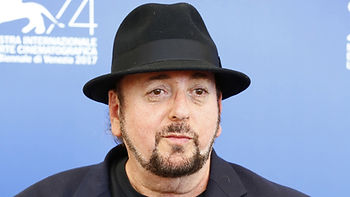
This is a horrible movie written and directed by a fedora-wearing, self-proclaimed pick-up artist who was later revealed to be a serial sexual assaulter. It’s bad enough that it’s dripping with contempt for women and that the romance centers on a sleazy stalker who repeatedly violates a woman’s boundaries, but it’s also boring, terribly written, badly paced, and unoriginal.
Robert Downey Jr. plays Jack Jericho, an elementary school teacher and womanizer who claims his profession is being a romantic. His schtick is chasing pretty women on the street and rapid-firing one-liners at them until they give him their number, which he writes on a sheet of paper completely covered in phone numbers. His banter is the kind that dumb people think is really smart: “Has anyone ever told you you have the face of a Boticelli and the body of a Degas?” His boss almost fires him for telling a married parent of one of his students that she has “the face of a Chagall and the body of a Rubens,” which he helpfully explains for us dumb dumb viewers, “Chagall’s women aren’t beautiful and Ruben’s women are fat.”
One night, Jack goes to a bar and sees Molly Ringwald’s Randy being harassed by some older guys. She’s desperately trying to pay off her dad’s gambling debts to the mob. Harvey Keitel is Alonzo, the mob boss who pressures her to sleep with a rich buddy of his in exchange for money. She refuses, preferring to work double-shifts at her job, bet on horses, and play blackjack to earn the money.
The next day, Jack sees Randy on the street, so he runs up to her, gives her a rose, and uses his Boticelli/Degas line on her. He’s intrigued when she shows him that she’s carrying a book about Boticelli. He pays her a long string of compliments and says he must make love to her immediately. This somehow works. They have sex in his car and when they’re getting dressed, he asks her for her number, but she refuses. She starts walking to work and he drives slowly next to her, continuing to pester her. He later spies her at work as a tour guide at the history museum.
Jack gathers up his third-graders and books a tour so he can keep bothering her. She tells him to tear up his list of women’s phone numbers, which he pretends to do before retrieving it when she’s not looking. She tells him to leave her alone, and the kids watching say “Ahhh” in disappointment. Later, he follows her home, knocks on her door, and barges in. She’s arguing with her father Flash, played by Dennis Hopper, when Alonzo and one of his goons show up. Alonzo threatens her about the money Flash owes him and grabs her by the neck. Jack tries to intervene and finds out that Flash owes the mob $25,000 by noon the next day.
Despite this urgent deadline, Randy and Jack go to Coney Island and Jack says if he wins her a teddy bear, she has to spend the night with him. He loses and she walks away from him. But of course he follows her. Next they hang out at the planetarium, totally unconcerned about mob threats. She manages to ditch him again and gets on a bus to Atlantic City, where Christine Baranski talks to her about her relationships with abusive men, saying, “Men can be fun.”
Randy plays blackjack, gathering a crowd because she’s winning. Alonzo and his goons show up and harass her. Jack and Flash show up and some goons take Flash to a supply closet, and Jack doesn’t seem to care. Randy loses all her money and walks away in despair, so Jack runs after her and guilt trips her about ditching him at the planetarium. She cries about all the stress she’s been under trying to pay off her dad’s debts, and Jack responds with a long, tedious gambling metaphor: “Why don’t you try gambling on me?” and “Gamble on yourself.”
He sells his Camaro and buys a crappier car so he has some cash. Still without any urgency, they get cheeseburgers, and twenty-one-year-old Jack imparts the wisdom of the elderly on nineteen-year-old Randy: “You know what this cheeseburger is like? Life.”
Finally, they go back to the casino and immediately win all the money she needs on roulette. Jack gives the money to Alonzo, who still insists that Randy needs to sleep with his buddy. Jack makes a scene, another mobster intervenes, and Alonzo releases Flash.
Jack looks for Randy, but she’s escaped again. He chases her down and says he wants to be with her. They continue the lame gambling metaphors. Randy says, “You’re just as big a gambler as I am,” and Jack sadly replies, “Being with you isn’t a gamble,” tears up his list of numbers, and walks away. Randy takes her father home.
The next morning, Randy waits outside Jack’s apartment and asks him, “Has anyone ever told you you have crazy taste in women?” He turns her down and she walks away. But he quickly changes his mind and chases her down. They agree that they’ll cause each other trouble and go to dinner.
This movie thinks it’s telling a charming story about a womanizer who meets his match and decides to settle down, but in reality it showcases the manipulative, aggressive tactics of a man who won’t hear a woman when she tells him no. It’s also boring and clichéd, with mobsters who are unpleasant but not threatening and the same tired gambling metaphors repeated over and over again. There’s nothing redeemable about this piece of shit movie. To paraphrase James Downey in Billy Madison: This movie is one of the most insanely idiotic things I have ever seen. Everyone in this room is now dumber for having seen it. I award you no points, and may God have mercy on your soul.
VERDICT: GUILTY



Comments